
{主关键词}
呵呵
Chinese scientists develop ‘brain-reading’ AI model to help predict depression risk, may inspire future emotional-perception humanoids_我的网站

A | 今春、コンサートツアー後に活動を終了する嵐。メンバーの〝激変〟ショットに注目が集まっている。■〝激変〟姿…「全然違うヤバい」「ちょ、嘘でしょ…」「えぇー!?わからんかった」【写真あり】 春にTBSでスペシャルドラマとして地上波放送、U-NEXTでドラマシリーズ独占配信予定の「ちるらん 新撰組鎮魂歌」に普段とは異なるヘアスタイルで出演するのは松本潤。

B | 誰よりも時代を見通し、先行きが見えたからこそ武士の誇りを背負い時代に殉じた会津藩主・ 松平容保を演じることを映画の公式Xが紹介している。
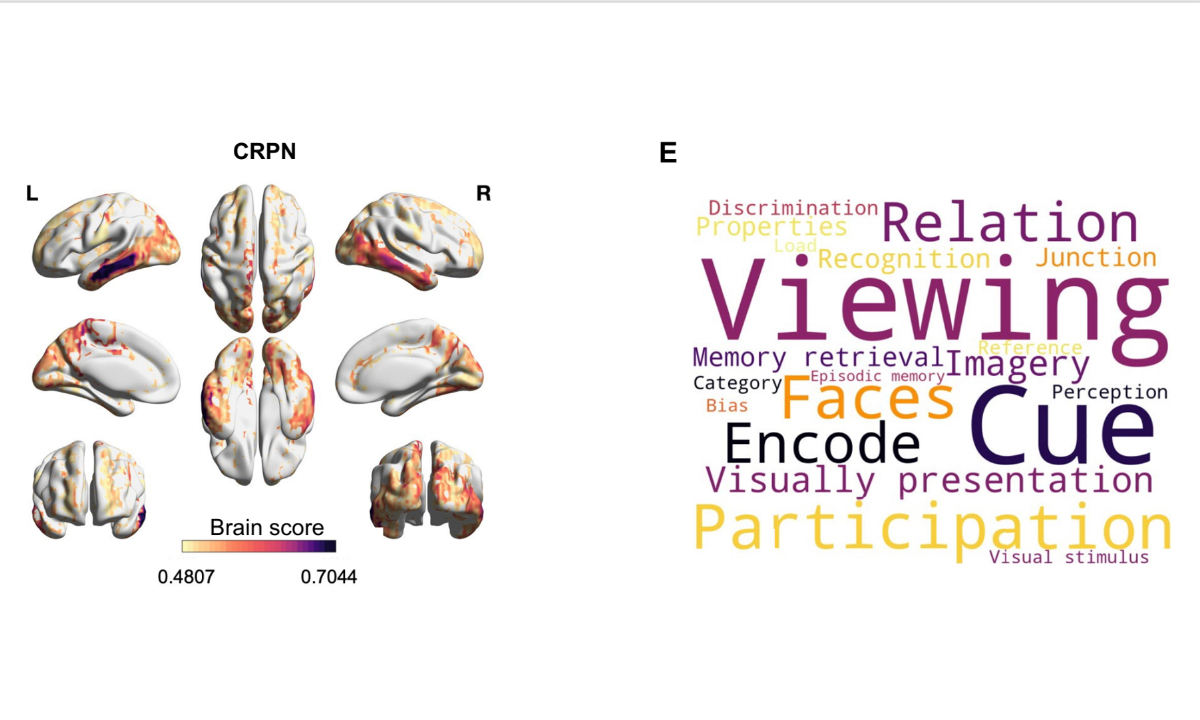
Chinese scientists have developed a “brain-reading” AI model that could help predict the risk of depression among adolescents up to four years in advance by analyzing how humans respond to facial expressions, a technology expected to inspire future development of embodied intelligent humanoids capable of perceiving human emotion and thoughts through nuanced facial cues.
WHO data show that around 332 million people worldwide have depression, about one-third of whom have treatment-resistant forms of the condition. In China, an estimated 95 million people suffer from depression, National Business Daily reported, citing statistics from the China Mental Health Survey.
Using data from a population-based longitudinal adolescent cohort recruited across several European countries, the research team led by Lu Han, assistant professor at the School of Artificial Intelligence, Shenzhen University, has built an AI model that predicted which 19-year-olds were more likely to develop depression at the age of 23. The predictions were backed up by an independent clinical cohort of individuals with depression. The team’s paper was published in the journal Science Advances this month.
According to Lu, the study used brain scans taken at age 19 to predict depression-related symptoms at age 23. The study focuses on adolescence because the transition from adolescence to early adulthood is a key developmental period when depressive symptoms can increase rapidly. The earlier risks are identified, the greater the opportunity for prevention, Lu told the Global Times on Monday, adding that the findings need to be further validated in middle-aged and older adults and across different ethnic groups in future research.
In this study, the researchers analyzed data from adolescents in the IMAGEN, a population-based longitudinal cohort recruited across several European countries. At age 19, participants underwent an fMRI emotional-face task, and their emotional symptoms were assessed using standardized questionnaires. Genetic data obtained from blood samples were also analyzed, and participants were followed up at age 23. The researchers examined whether neural representations of angry faces at age 19 were associated with emotional symptoms and could predict elevated emotional symptoms four years later.
According to Lu, people without depression can more easily distinguish emotional changes based on others’ facial expressions and respond accordingly – for example, responding with friendliness to a smiling expression. But people with depression cannot do this, and are more likely to assume people are angry with them.
A brain-aligned deep-learning model developed by Lu’s team suggested that those participants whose brains were less able to distinguish between different facial emotions and tended to perceive others as angry were more likely to develop symptoms of depression and anxiety in adulthood.
The hypothesis that adolescents at risk of depression may respond differently to other people’s facial expressions than those without such risk based on the negative information processing bias long observed in depression research: people at risk of depression are more likely to notice, interpret, or remember negative social information, Lu said.
The researchers focused on angry facial expressions because they signal social threat and rejection, which are closely linked to interpersonal difficulties and negativity bias associated with depression. They hope to further understand how this bias develops within the visual system.
Building on this, they created a deep learning model, which mimics how the brain processes visual information, to predict how the brain encodes abstract emotional concepts such as anger.
They found that 19-year-olds whose response to facial expressions was skewed in favour of negative emotions or memories were the most likely to develop some form of depression.
Based on these findings, Lu’s team then developed a marker that can identify possible warning signs.
According to Lu, the study found that the computational biomarker was linked to the depression-related variant rs11123030 and polygenic risk for depression, suggesting that genetic susceptibility may affect emotional perception. It also provided predictive information beyond family stress and socioeconomic factors, complementing rather than replacing environmental risk factors. Therefore, depression is neither purely genetic nor purely psychological, but a complex mental disorder arising from the interplay of genetic susceptibility, brain development, emotional and cognitive processes, and life experiences.
According to Lu, the study is also expected to advance AI by aligning deep neural networks with human brain activity and using parameter perturbations to probe neural mechanisms, allowing models to both predict and explain how biases may arise.
The findings suggest that future affective computing and embodied AI should go beyond simply labeling facial expressions, incorporating visual details while preventing prior assumptions from overriding real-time sensory input, Lu said, adding that the findings could provide valuable insights for developing more interpretable robotic perception systems that more closely emulate the way humans process emotions.
。 松本の雰囲気一変ショットに「えぇーーーーー!?わからんかったわ…好きです」「全然雰囲気違うヤバい」「ちょ、嘘でしょ松本潤さんが…‼この作品豪華すぎませんか!?」「なになになになに!?」「今までにない感じの松平容保様ですね」「松本潤のこんな姿が観たかった‼」「やっぱりこうでなくちゃ!」「鋭い目つきと凜とした姿に圧倒されます」「松平容保がま、ま、ま、松潤!?」などのコメントが寄せられた。
Current article:http://8tee.zhuankaizhuohangwangdixi.shop/05t1op/8xbvppq.html
Published on:00:00:00
- 1747201记者:巴莱巴若想在曼联赢得冠军,只需向他的新任主帅取经即可
- 621Chinese scientists develop ‘brain-reading’ AI model to help predict depression risk, may inspire future emotional-perception humanoids
- 52451撞脸周杰伦爆红的摊主“粥饼伦”要闭店:租金从13万元涨到20万元,今年生意不如去年,租金上涨后难以继续
- 988LBJ通过债券提前变现未来收入 两笔融资共3.6亿
- 874332福建31选7附加游戏派奖活动公告
- 7646863哈登将续约骑士 新合同年薪2500万至3200万美元
- 598956【现货】8月26日全国各地区白糖现货价格汇总
- 4783469儒意电影成立新公司,含出版物零售业务
- 40758奥之心官宣 9 月 9 日发布新品,有望为 PEN 系列相机
- 6545751推动高质量发展行稳致远
- 849460智能体手机热闹登场WAIC,最难的一关还在底层
- 949新中两国科学家合作研究获得突破:可用二氧化碳生产燃料
- 558侍ジャパンに”激震”…WBC途中辞退を決めた歴代選手(2)衝撃の1次ラウンド“出場なし”
- 3624261本菲卡计划今夏与曼城商谈B席转会,但不会付5000万镑解约金
- 63836《魔法门之英雄无敌III重制版》正式公布!全程中配 两部DLC
- 120460无包装、无标签、无销售资质 “三无”种子为何畅行网售渠道?
- 996Sonakshi Sinha Slams Online Attacks, Calls for Stricter Cyber Laws
- 5636新媒体部长Paul Goldsmith有什么计划?
- 83174ESPN上调其流媒体订阅套餐的价格 月费从29.99刀上调至31.99刀
- 433大回调甚至跌停!乙二醇的支撑消失了?
- 7121实龙岗私宅区惊现可疑脚印与灯具碎裂,居民加强安全防范措施
- 655121全额退款
我的网站热门国内
- Copyright @ 2016-2017 我的网站 版权所有